- Thousands of households in Uganda and the DR Congo rely on Lake Albert for water and fish. The lake also provides key habitat for wildlife such as shoebills and Goliath herons.
- Two oilfields are in active development: Kingfisher, on the eastern shore, run by CNOOC’s Ugandan affiliate, and Tilenga, near the lake’s northeastern end, run by TotalEnergies. A new report argues they threaten water quality and wildlife.
- “Issues such as the lack of commitment to a system of sound disposal of water, sewage and drilling cuttings all portend a bad omen in an area that is home to some unique wildlife,” the report warns.
Lake Albert pollution from oil drilling remains a major concern for environmentalists. They fear underinvestment in spill prevention, poor waste disposal, and overuse of water. Uganda, however, insists that adequate measures are in place to protect the lake and its ecosystem.
A report commissioned by Environmental Defenders (ED), a conservation and human rights organization, finds that biodiversity loss, spills, and groundwater pollution are increasingly common in the Albertine region.
In particular, the report criticizes the building of oil facilities on the shores of Lake Albert without adequate mitigation for the Tilenga and Kingfisher projects. According to the report, these projects pose major threats to the environment, water, and community health around the lake.

Who depends on Lake Albert?
In the Democratic Republic of the Congo (DRC), about 100,000 households rely on Lake Albert for water, and more than 20,000 people fish there. A major oil spill could threaten the very survival of these communities. Yet mitigation against such a disaster has not been adequate.
Cheap technology in a fragile national park
E-Tech International has previously found that the technology used in the Albertine region aims to maximize profit rather than protect the environment. This is dangerous, the report says, because 10 well pads, 181 kilometers (112 miles) of pipeline, and new roads are planned inside Murchison Falls National Park.
The park is home to increasingly rare wildlife that cannot coexist with oil operations. Because of its rich plant and animal life, it requires careful handling. The report argues this is only possible with the best available technology.

For example, E-Tech International recommends cutting Tilenga’s well pads from 10 to two well-placed ones that could still reach all the oil reserves. In its view, this would represent best practice.
Officials say safeguards are in place
Critics of the report, however, say its recommendations are merely opinions and that best practices are already in place. Project supporters, including staff of the National Environment Management Authority (NEMA), say adequate mitigation measures were identified and are being implemented smoothly.
They also say exploration went well and that production has faced no problems so far. Moreover, they point to expert teams on the ground who monitor the projects and respond to any changes.

Will Uganda prevent Lake Albert pollution?
It remains unclear whether this confidence is justified. There is still no firm commitment to sound disposal of wastewater, sewage, and drilling waste, which is a bad sign in an area home to distinctive wildlife.
Environmental Defenders also warns that chemical-based drilling mud endangers the ecosystem around Lake Albert. In addition, once production starts, it may be hard to manage stormwater alongside large volumes of effluent and solid waste. This could raise the risk of oil-contaminated runoff reaching the Kamansinig River and nearby wetlands. Read more: environmentalists decry inadequate safeguards on Lake Albert oil projects.
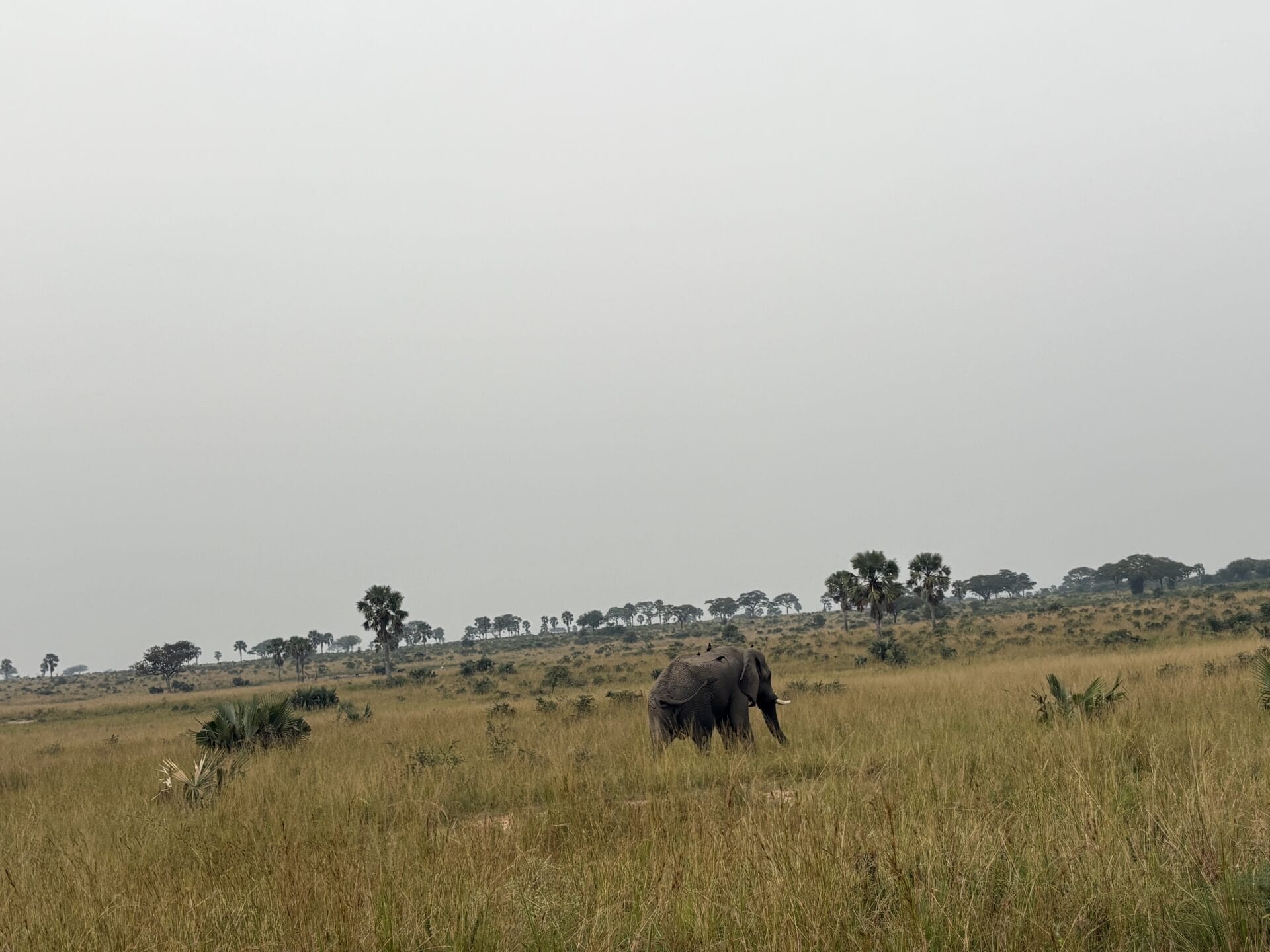
Banner image: Elephants are among the unique species that rely on Lake Albert in Uganda. Image by Environmental Defenders.