
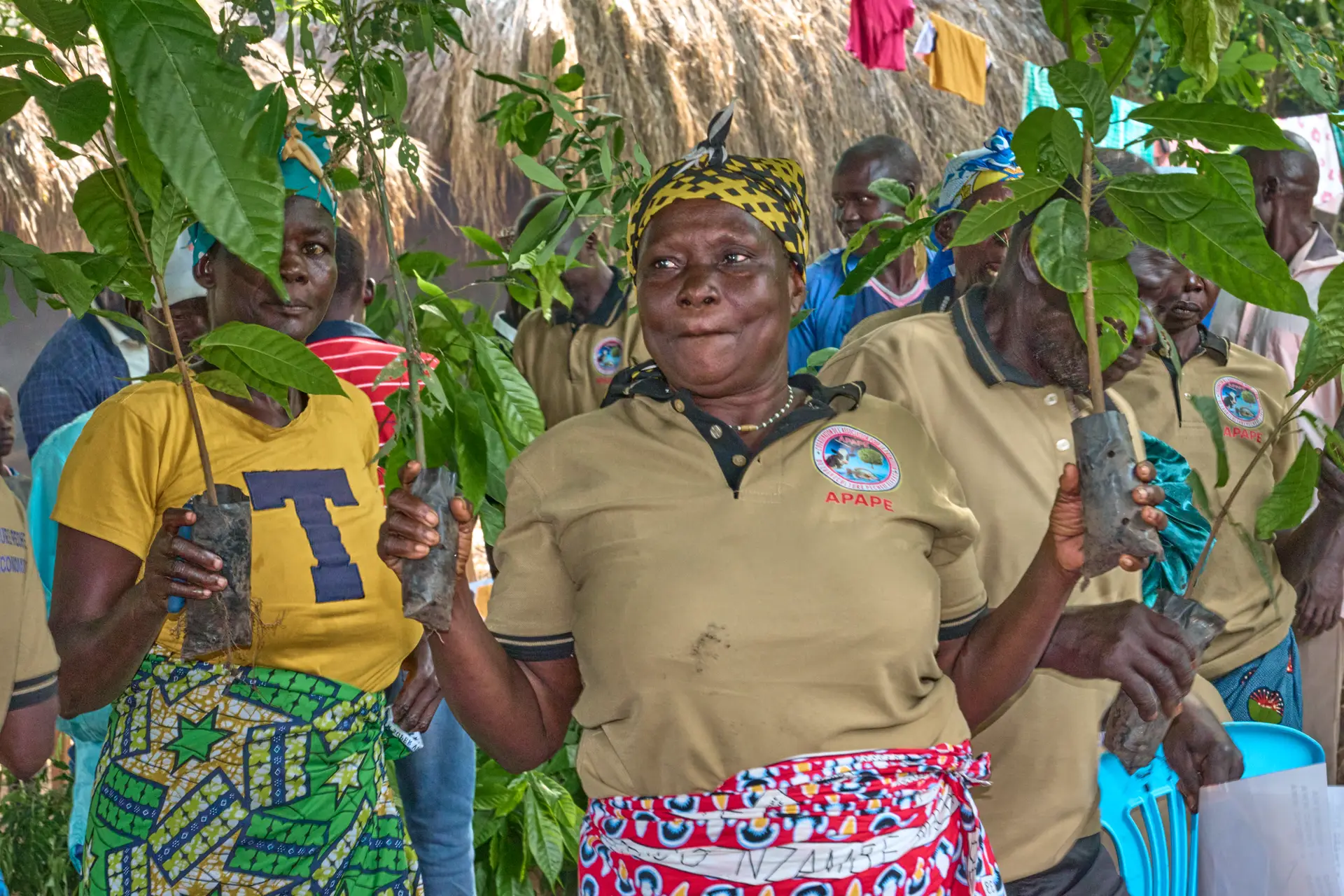
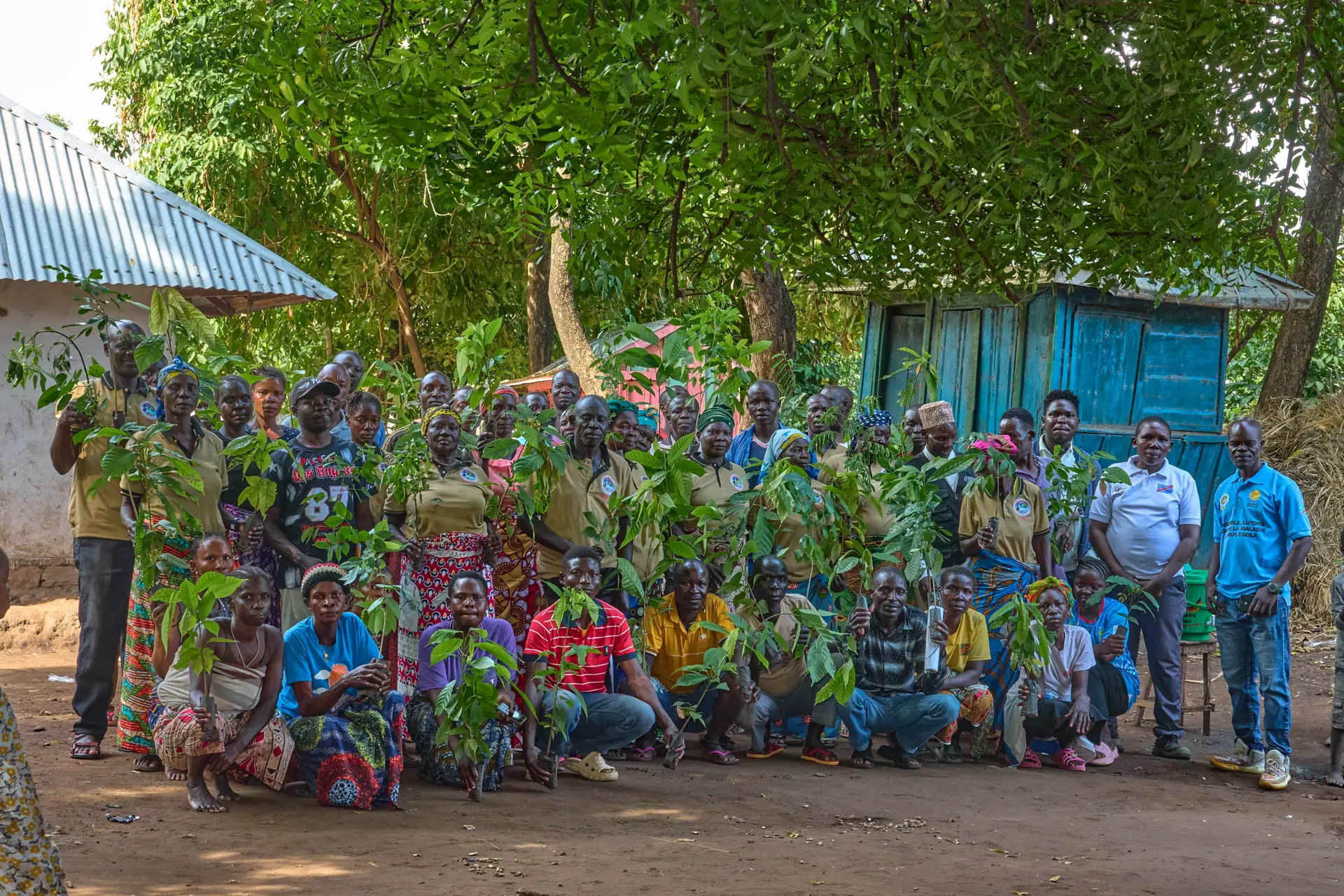
A 56-member association of farmers and fishers in Ituri Province is distributing 55,803 free tree seedlings. Their survival depends on land ownership and protection from fire and goats.
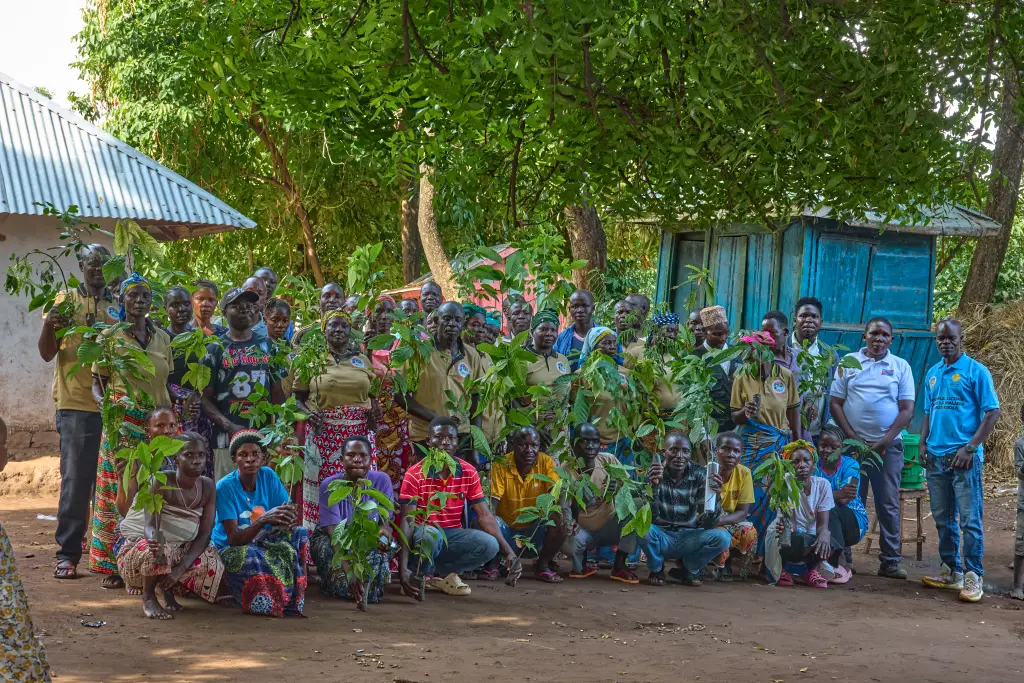
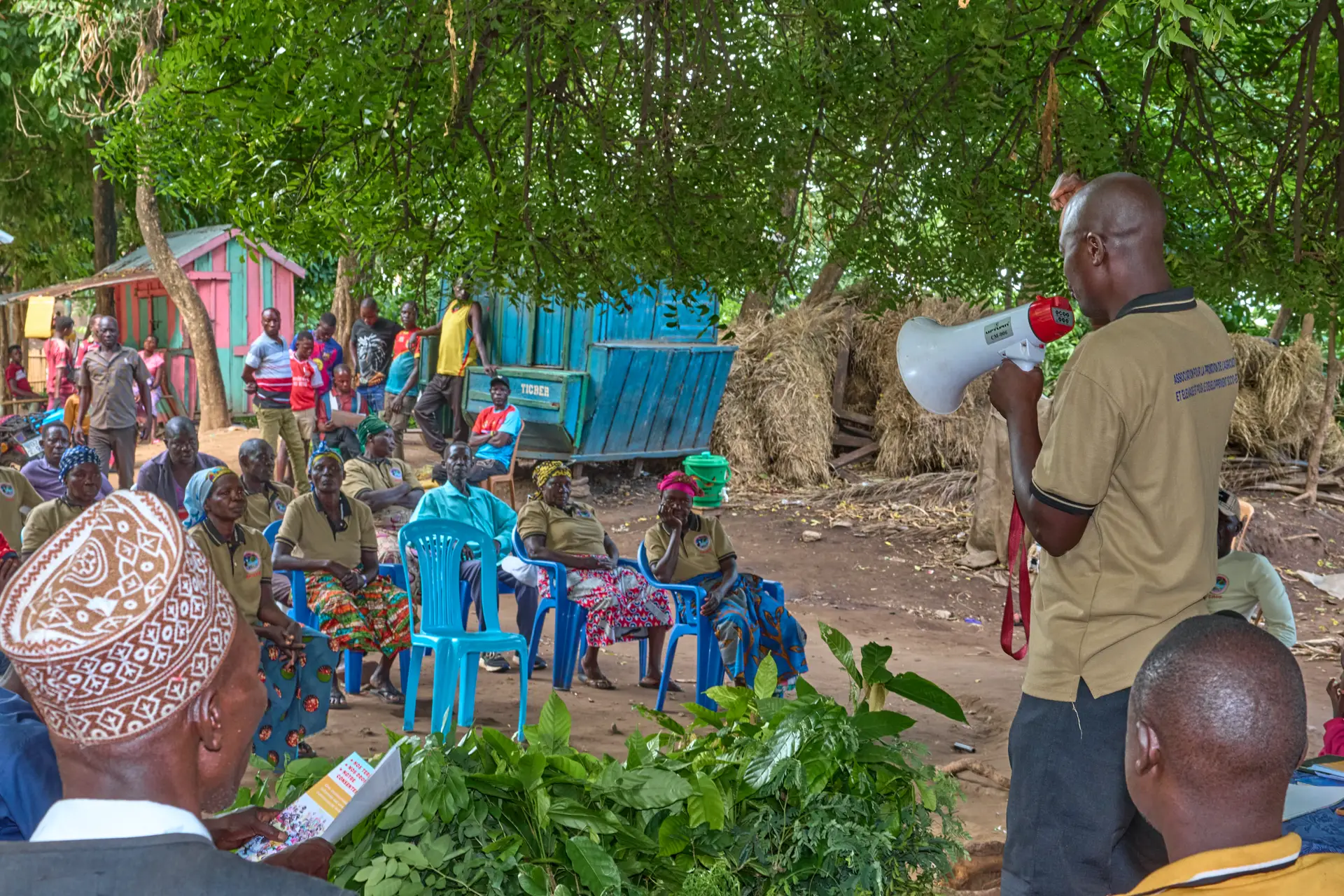
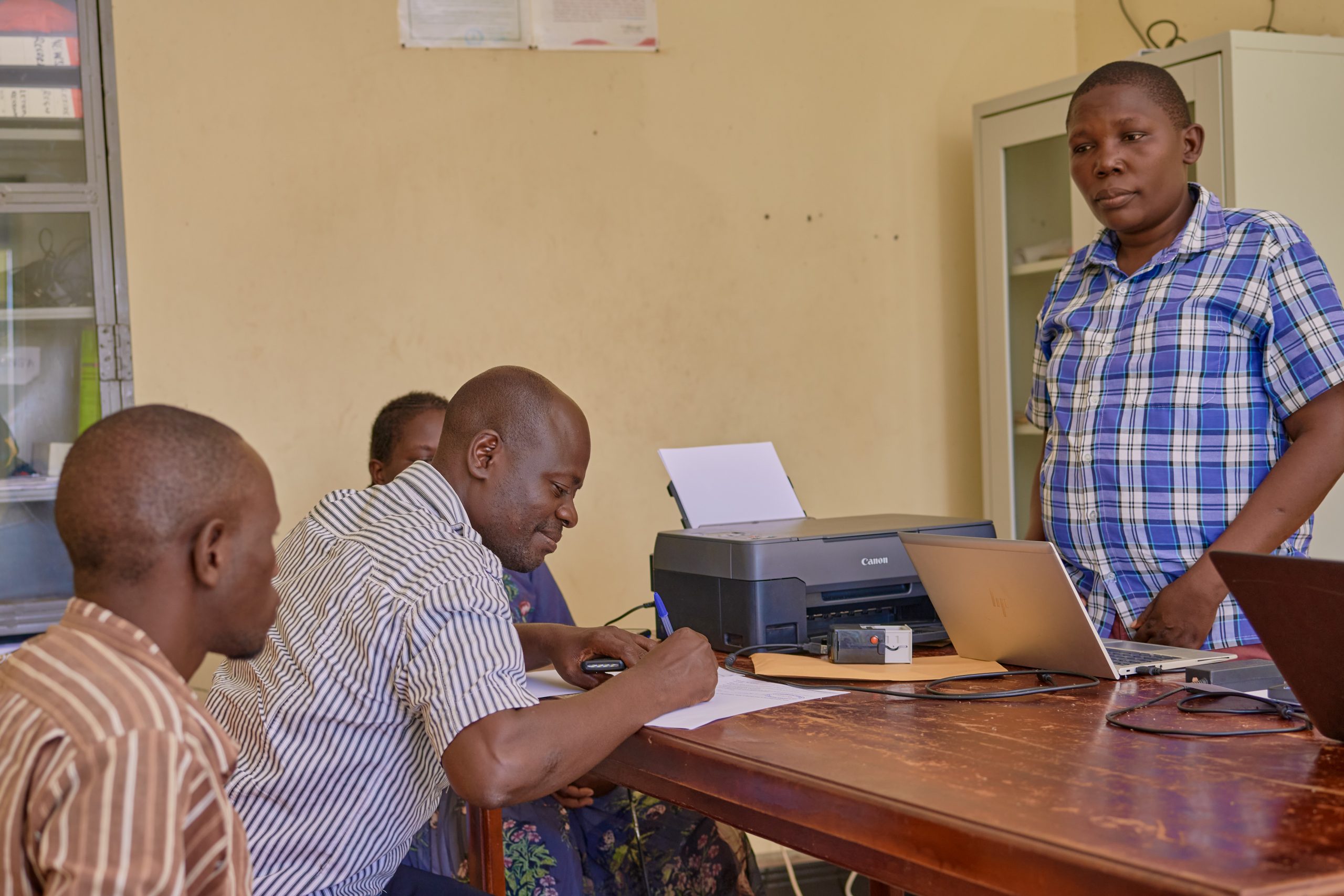
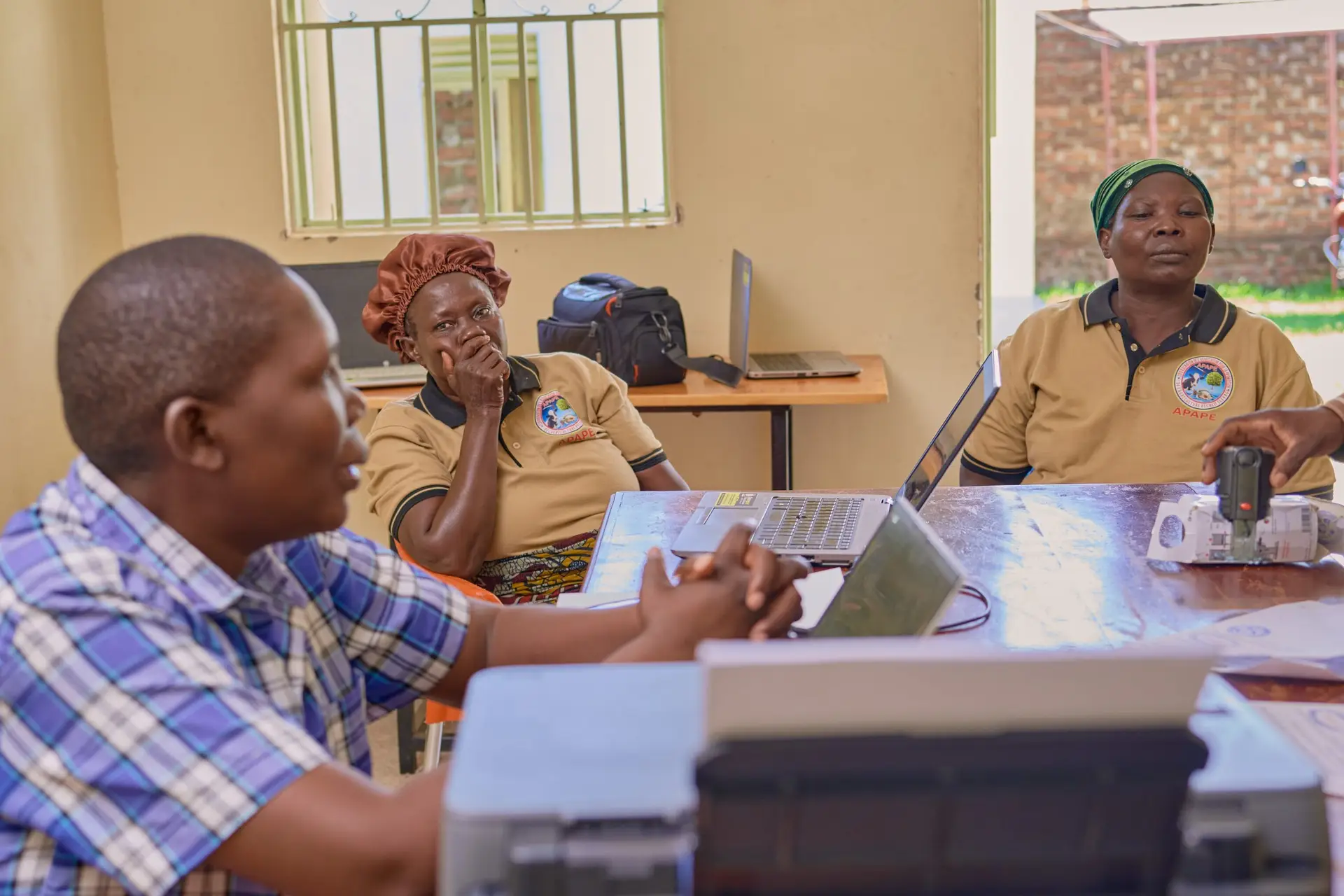
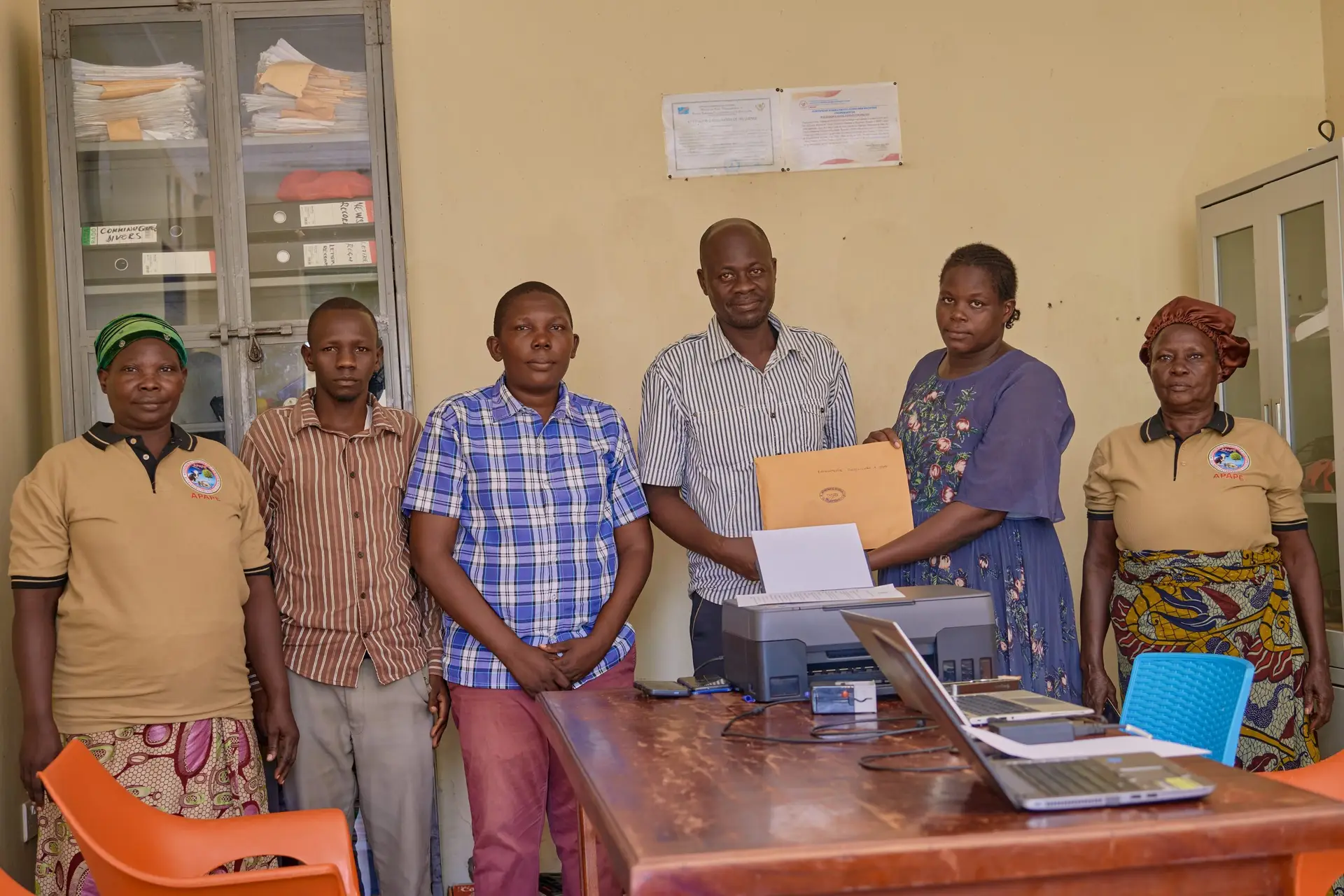
The trees are free, but the land to plant them is not. That was the message on Saturday, Sept. 5, when local authorities, community associations, and members of a farmers’ and fishers’ group gathered in Ajii, a fishing camp on the Congolese shore of Lake Albert, to launch a giveaway of 55,803 seedlings. To take seedlings home, a person must own land.
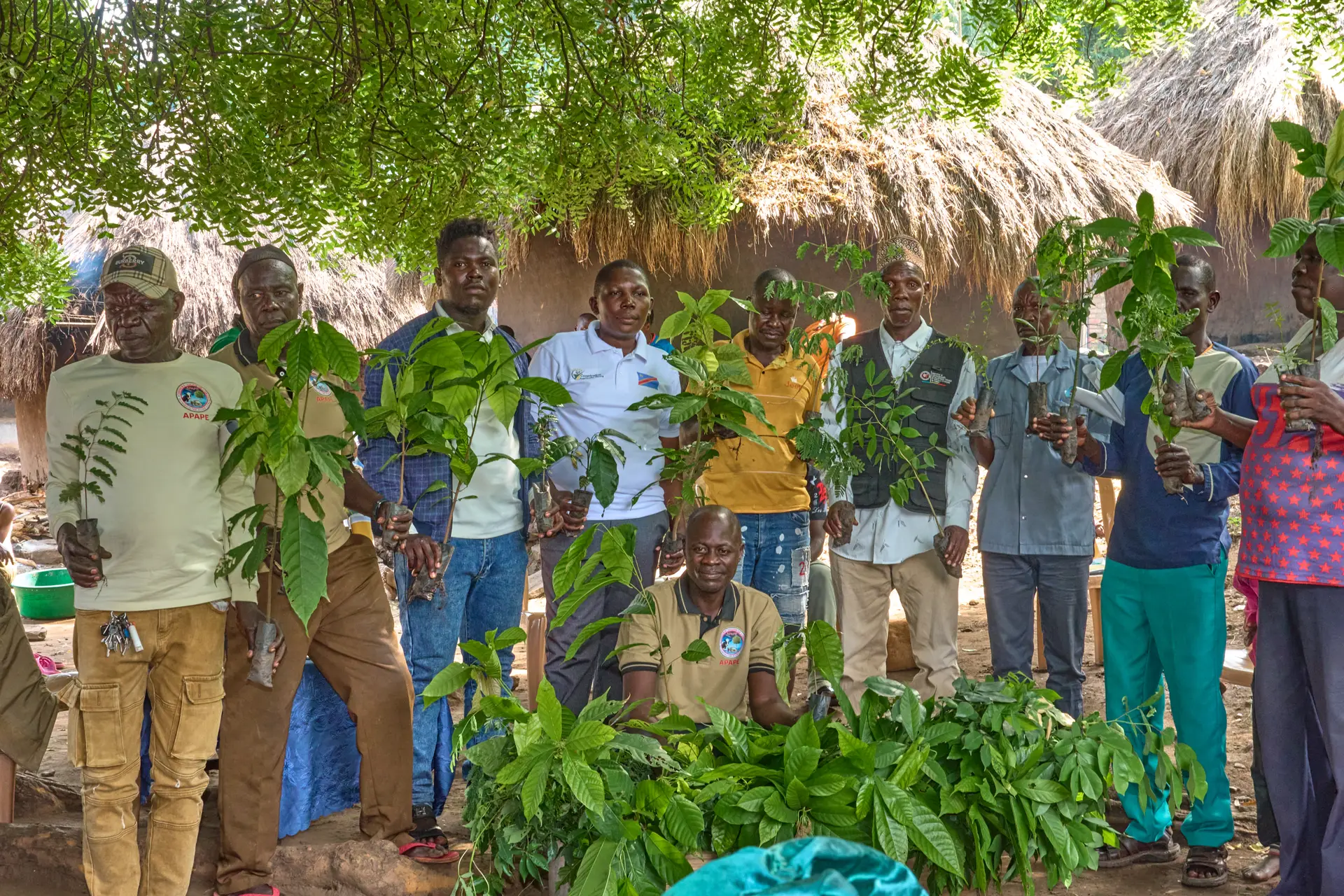
The group behind it is the Association for the Promotion of Agriculture, Fishing and Livestock, known by its French initials, APAPE. Its list of 10 tree varieties includes hardwoods and crop trees. Available hardwoods include 17,439 seedlings of a species known locally as Beyo (Afzelia africana), while the crops include 9,418 cocoa plants and 512 shea trees.
The distribution of tree seedlings in Ituri is the second phase of a campaign APAPE began in 2025, with grant support from Environmental Defenders (ED), an environmental justice group working across the Albertine Rift. The campaign, implemented by ED alongside its social enterprise arm, the Terra Agricultural Cooperative, rests on a bet that is simple to state but hard to prove: trees last longer when the people who plant them own the land and earn income from those gardens.
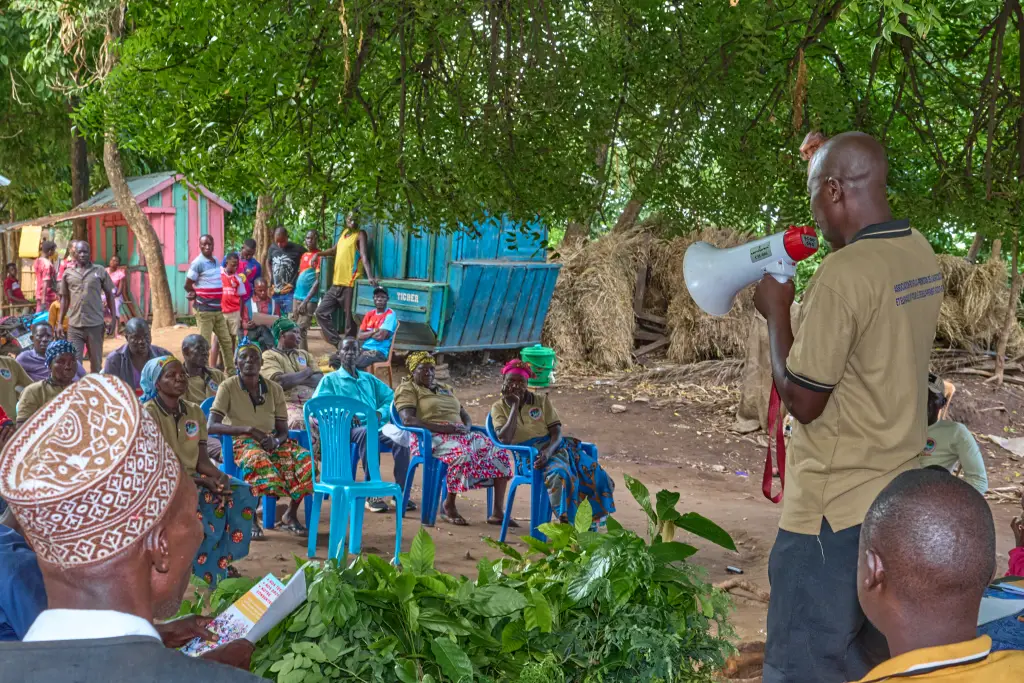
“Humanity can never survive without trees,” says Samuel Warom, the ED and Terra representative. Speaking to a crowd gathered to receive the seedlings, Warom noted that to reduce heat and safeguard our environment, it was imperative for the community to plant trees.
A shoreline under pressure
APAPE’s primary operating area is Pajulu 3, a neighborhood of the Ajii fishing camp in Wagungu Chiefdom, Mahagi Territory, in the Democratic Republic of Congo (DRC). The Blue Mountains overlook Lake Albert’s shores on the DRC side and climb to the Lendu Plateau—a Key Biodiversity Area of about 4,100 square kilometers.
Montane forest once grew in patches above 1,500 meters. However, most of it is now gone. Across Ituri, the unregulated export of crops such as cocoa and coffee pushes farmers to clear new land, according to Rikolto, a Belgian nonprofit that works with farmers in the province.
For the 56 members of APAPE, whose main sources of livelihood are farming, fishing, and raising livestock, the preservation of these forests should be important because they provide both rain and the rivers that feed the swamps and lakes in the area. But land in this area is a challenge. A Norwegian Refugee Council study of Mahagi and six other territories found that while 92% of displaced households held farmland before they fled, only 51% could access it upon return.
Displacement means that not every member of the Pajulu 3 community can afford to plant tree seedlings. But APAPE still comes together to address their challenges by focusing on everyday problems such as deforestation, declining fish stocks, degraded land, and poverty.
Land first, then tree seedlings
The realities in this part of eastern DRC—where conflict leads to the displacement of a family that only returns to find their land has been taken over—explain APAPE’s one firm rule. Land ownership is the ironclad requirement, and consequently, institutions have higher priority for accessing these tree seedlings.
Ukethi Combe, the association’s president, said recipients must own land and demonstrate a genuine commitment to reforestation. Farming associations, schools, and churches get priority.
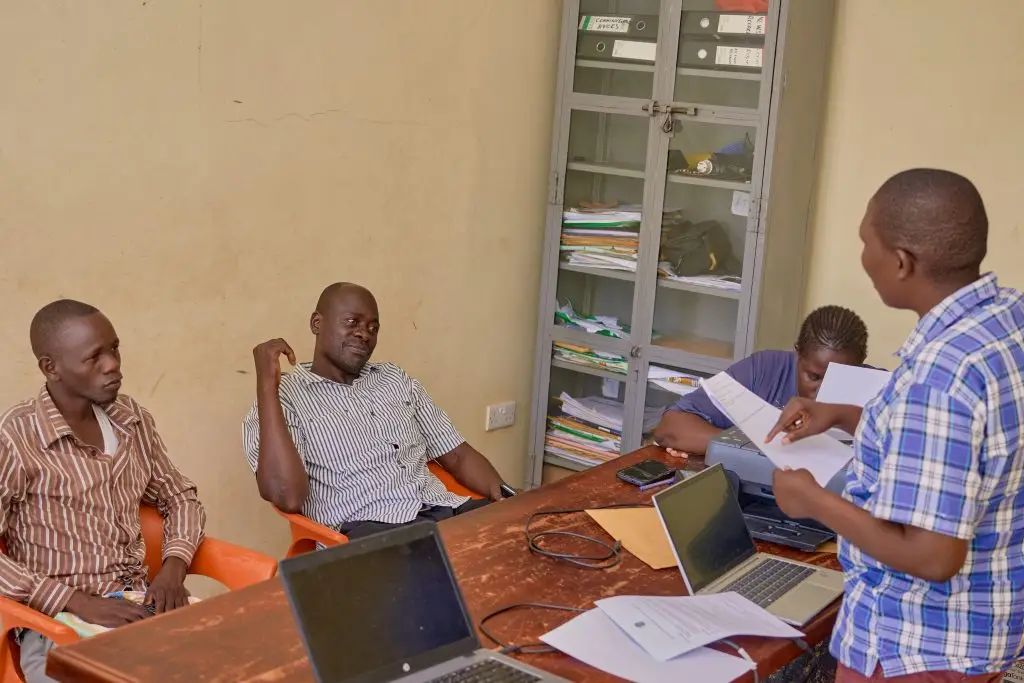
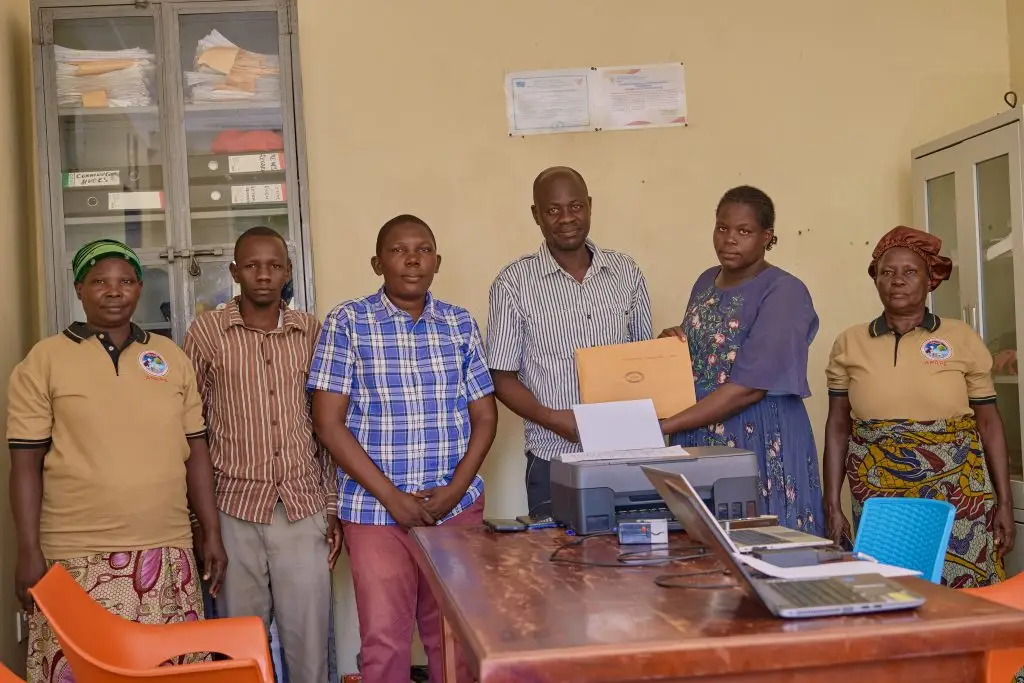
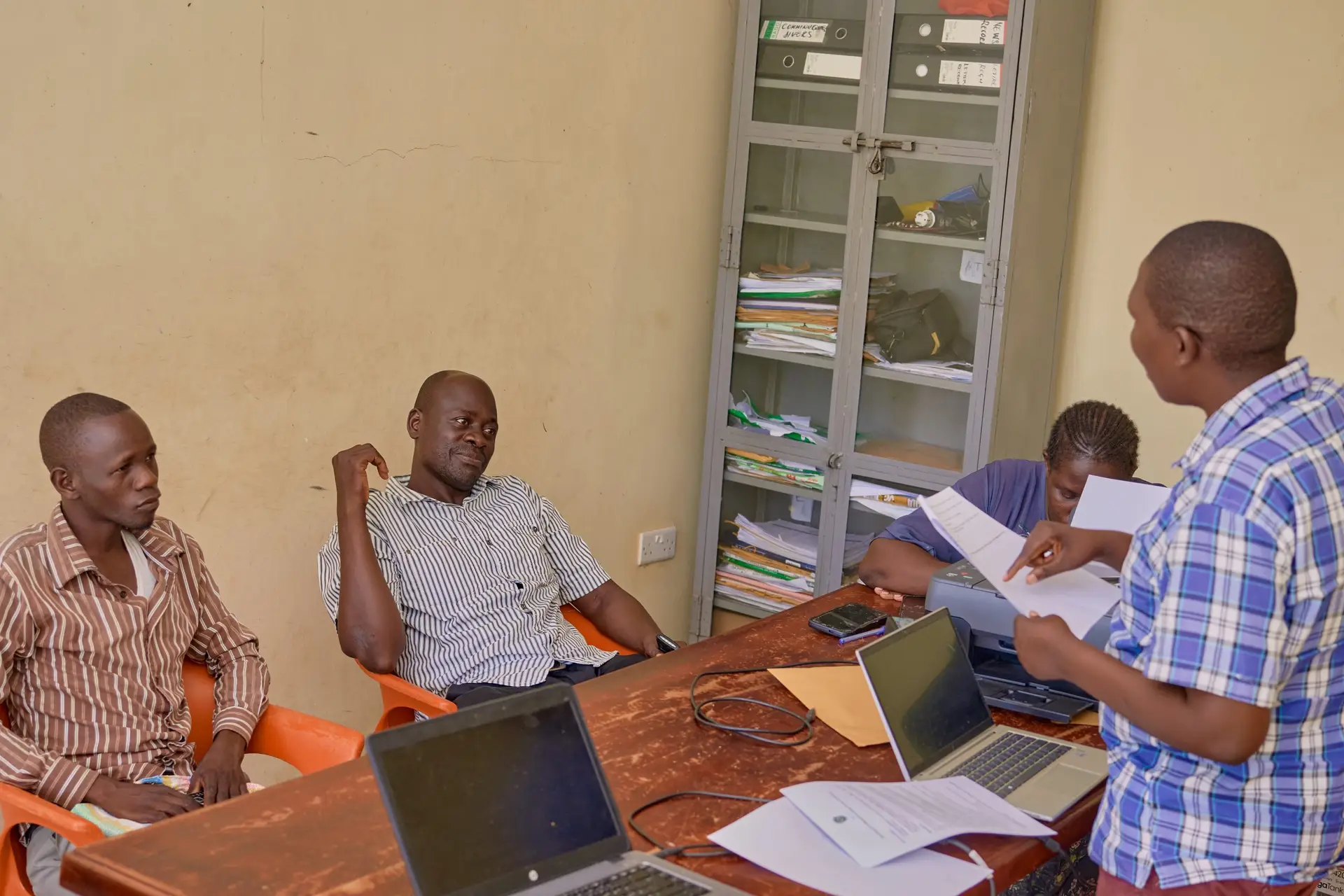
APAPE judges commitment by what is already on the plot. Before handing over any tree seedlings, it uses Environmental Defenders’ standards to determine whether a farmer or landowner’s crop husbandry practices are adequate to care for the trees. Recipients then sign a collaboration agreement pledging to protect and maintain what they plant.
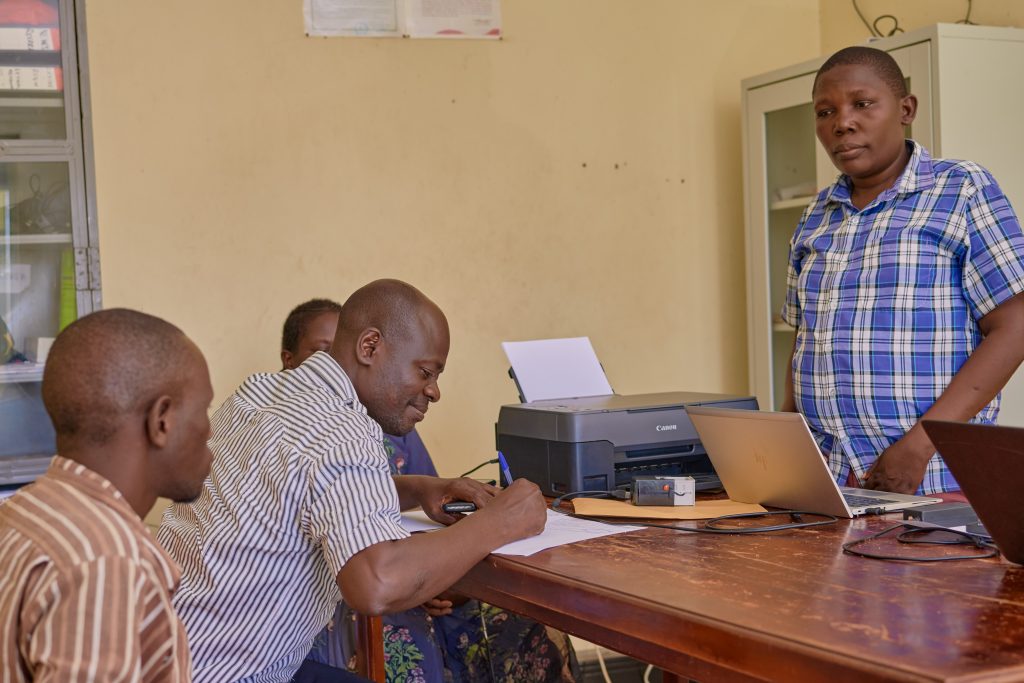
The terms are intentionally strict because poverty can push households to join a project and, weeks or months later, cut the trees for timber or building materials, or sell the land outright. As a result, the requirements aim to discourage people who arrive excited at a launch but are not prepared to do the work.
The logic of the land rule is practical. Anyone can cut, burn, or claim a tree on land with no clear owner. But the rule also means the seedlings go to families who already hold land, not to those farming borrowed or disputed plots.
Cocoa as an income bridge
APAPE says it chose species to balance restoration with income. Trees that rebuild hillsides, such as African mahogany and nitrogen-fixing Albizia, share the list with cash and fruit crops, including cocoa, tamarind, and shea.
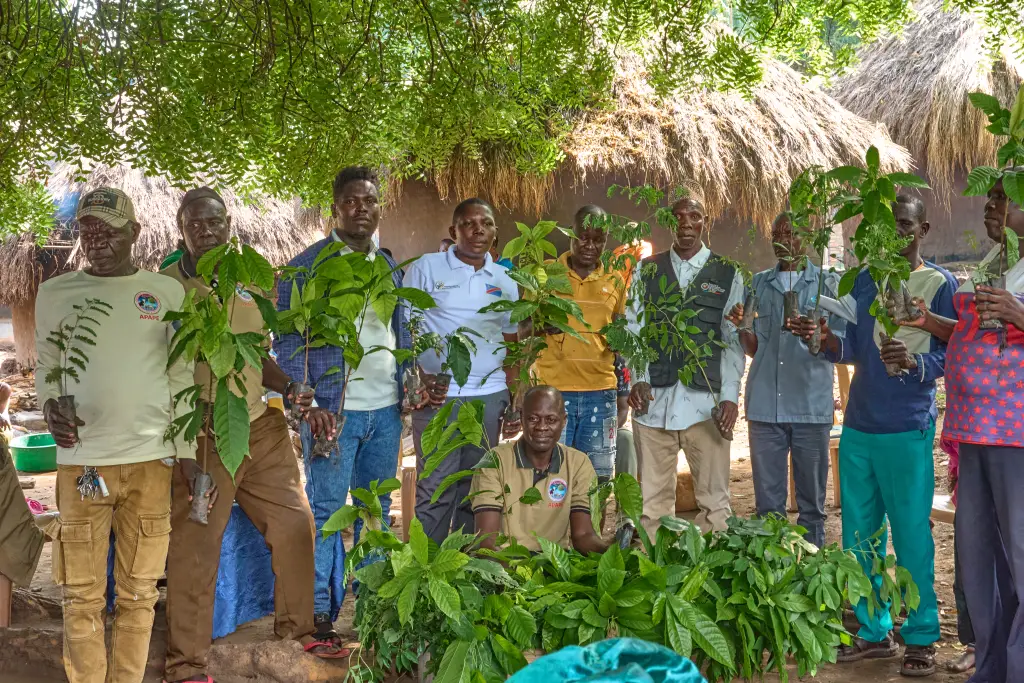
Cocoa is the second-largest batch of tree seedlings, and for good reason. Indeed, in Mambasa Territory, south of Mahagi, a Rikolto study found that cocoa is the main source of income for rural families. What it pays, however, is another matter. Ituri growers sell into a market dominated by a few big buyers who pay low prices regardless of quality. Meanwhile, middlemen, the alternative to big buyers, pay remote farmers even less.
That is where the campaign’s second backer comes in. The Terra Agricultural Cooperative, launched by Environmental Defenders in July 2024, says it connects farmers with training, finance, and fair markets. Terra grew out of land-rights work initiated by training workshops held between March and June 2023. Those 17 workshops across Mahagi focused on land rights, environmental protection, and climate-smart agriculture.
Farmers can also grow cocoa under shade on land that is already cleared. In the Ituri Forest, the Wildlife Conservation Society reports that shade-grown cacao helps stabilize farming because it is a perennial crop, and that 54% of families in participating villages already earn income from it.
The tree seedlings being planted in Ituri
| Local name | Species | Seedlings |
|---|---|---|
| Beyo | Afzelia (Afzelia africana) | 17,439 |
| Cacao | Cocoa | 9,418 |
| Tido | African mahogany (Khaya anthotheca) | 8,121 |
| Uber | Albizia | 7,623 |
| Tho | Desert date (Balanites aegyptiaca) | 4,345 |
| Cwa | Tamarind | 3,521 |
| Nyapamba | Albizia | 2,101 |
| Lira | Giant lira (Melia) | 1,411 |
| Neem | Neem | 1,312 |
| Yawu | Shea | 512 |
| Total | 55,803 |
From seed bank to hillside
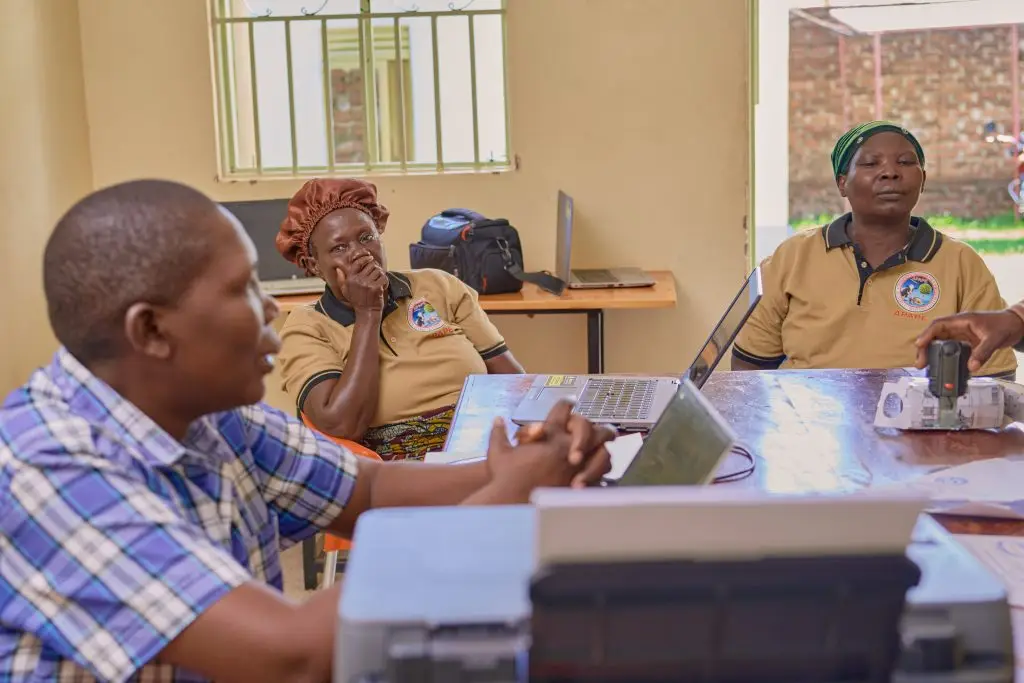
Every seedling starts as a seed, and APAPE controls that first step. It operates its own nursery and a native seed bank, built with grants and technical support from Environmental Defenders. Members collect seed from the remaining forest patches, store extra in years of heavy fruiting, and test whether it will germinate. The nursery then grows the seed into tree seedlings ready for planting.
The work is also a way to earn income. Community members learn seed collection, handling, and nursery propagation. As a result, Environmental Defenders says, those skills create income opportunities for those who learn them.
The list of distributed tree seedlings also includes three species classified as vulnerable by the IUCN: Afzelia, African mahogany, and shea.
In its first phase in 2025, APAPE gave away more than 21,000 tree seedlings in Ituri. This phase more than doubles that number.
The hard part comes after planting
Giving tree seedlings away is the easy part. Larger programs in Congo, for instance, have stumbled on what comes next.
The largest forest program to reach Ituri was PIREDD-O, a $33 million REDD+ effort approved in 2017 for three provinces of the former Orientale Province. Its final evaluation reported 1,208 hectares reforested, compared with 6,000 planned. In addition, seed reached farmers late and was of uneven quality, and evaluators found no consistent technical follow-up. The program stopped early, at the start of its fourth year in the field.
Fire is the other lesson. For example, a World Bank-backed project elsewhere in Congo reported in 2022 that bushfires had destroyed 894 hectares of its new agroforestry plantations in less than three years.
Why funding misses the groups raising tree seedlings
So the money has reached Ituri. Still, what it has struggled to do is reach groups the size of APAPE. The same evaluation found that the program asked local partners to pay for activities up front and then claim the costs back, which many could not afford. Moreover, the pattern is broader than a single program. Congo has pledged to restore 8 million hectares of degraded land by 2030, yet local nonprofits doing the planting often cannot reach international restoration funding, a GIZ policy paper found, in part because their projects are smaller than funders expect.
APAPE’s follow-up plan is modest and grounded. Field teams are visiting participating schools, churches, and farm groups to count surviving tree seedlings in Ituri and demonstrate how to care for them. Meanwhile, Radio Terra FM, a community station, is airing warnings about the two threats organizers worry about most: seasonal bushfires and roaming livestock.
Those survival counts will show whether the bet on land and livelihoods pays off. “Reforestation is a collective effort,” says Warom. In Ajii, that effort now comes down to 55,803 seedlings and the people who have promised to keep the fire and goats away.
Photos: Environmental Defenders.